
‘Black Experience in Oak Ridge’ Is Sunday Topic (2001)
by Caryl Kaplan for The Oak Ridger (published 27 April 2001)
“The Black Experience in Oak Ridge” is the topic of a special service at 10 a.m. Sunday at the Oak Ridge Unitarian Universalist Church, 1500 Oak Ridge Turnpike.
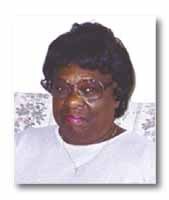
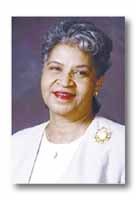
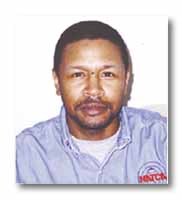
Three speakers, LaVada Chisholm, Jackie Holloway and Alfred Stephens, each bringing a different point of view, will talk about what it has been like to be a black Oak Ridger.
The service was coordinated by Ida Coveyou and Diantha Paré.
Chisholm came to Oak Ridge in 1944 as an 18-year-old high school graduate from Murfreesboro. Trained as a beauty operator, she worked in the segregated hutment area of Oak Ridge.
After the war she got her degree at Knoxville College, and she recently retired as a teacher with the Knox County schools.
Holloway, a member of the Anderson County Commission, arrived in 1956. She and LaVada Chisholm were determined to have their children go to integrated schools, and managed to get their girls included among the first 11 children entering the integrated Oak Ridge elementary schools.
Recently retired from Oak Ridge National Laboratory, Holloway is a former member of the board of the United Way of Anderson County and has been designated “The Children’s Champion” in the Success By Six Initiative.
Stephens was born in 1960 to civil rights activists Kathleen and Nelson Stephens. He attended the segregated Scarboro Elementary School until third grade, when he transferred to Cedar Hill.
He attended the University of Tennessee and is now an air traffic controller at McGhee Tyson Airport in Knoxville.
When Oak Ridge was founded in 1943, an architectural firm designed the houses and street plan, calling for neighborhoods, each with its own stores and school. A “Negro village” was included where East Village is now. The population, originally expected to peak at 25,000, grew to 75,000 by the spring of 1945. There was a desperate need for housing of any sort as soon as possible.
Black workers from Mississippi and Alabama, many illiterate, were recruited as janitors, maids, and manual laborers for wages that seemed remarkably high. Transported to Oak Ridge in trucks, they were settled in the “hutments” where home was a 16- by 16-foot room with four beds and a coal stove in the center. Bathhouses provided the only sanitary facilities.
Not only was there no privacy, children were not permitted, women were kept behind a guarded fence, and there was a curfew. Men lived in separate hutments and were not permitted on Oak Ridge streets at night. The residents felt anger, frustration and helplessness, resulting in violence, theft, and fear of physical harm.
In 1945, the segregated community of Scarboro was built to provide improved housing. Blacks still could not use the public library or the same water fountains, go to restaurants, the swimming pool or movies, and had to sit in the back of the bus.
A school for black children, set up in 1945 by Robert Officer and his wife, ended in ninth grade, so high school students had to be bused to Austin East in Knoxville.
Many Oak Ridgers, black and white, worked together to improve conditions. A volunteer high school was created that allowed students to stay in town until the Oak Ridge schools were integrated.
Ida Coveyou and Marie Anthony ran an adult evening school. A Colored Camp Council in the hutments lobbied to improve conditions. Later the Community Relations Council, Congress on Racial Equality, the Oak Ridge Federation for Equal Public Services, and many individuals picketed and worked to desegregate housing and other public services.
The City Council set up a Human Resources Advisory Board. The Principles and Purposes of the Unitarian Universalist Association affirm and promote “the inherent worth and dignity of every person” and underscore the importance of “justice, equity and compassion in human relations.”
Many members of this church worked tirelessly to help accomplish those efforts.
Members, friends and guests are invited to a special social hour after the service to celebrate “Everybody’s Birthday.”
[Contact information for Oak Ridge UU Church is outdated, so it was not included in this transcription.]
Caryl Kaplan is a publicist for the Oak Ridge Unitarian Universalist Church.