
Kingston: Capital for a Day, 1807
(from the archived RCHC Web site)
By J. C. “Babe” Parker
In 1806 the General Assembly of Tennessee passed a resolution that its next meeting be “at the Town of Kingston near Southwest Point.” On Monday, September 21, 1807 the General Assembly met at Kingston, which thus became the Second Capital of Tennessee. The General Assembly adjourned on the same day to meet two days later at Knoxville.
In order that the reader be acquainted with the facts leading up to this event, Southwest Point and the ferry at Kingston were still in the hands of the Cherokees. Thomas N. Clark, one of the earliest settlers of Kingston and the County, rented the ferry from the Indians at $600.00 per year. The Indians also actually owned the land on which the Southwest Point Garrison was located, and also one square mile between the Clinch and Tennessee rivers. The Long Island, about one mile up-stream from the mouth of the Clinch, also belonged to the Indians in 1805, which was drawn up by Return Jonathan Meigs, the Indian Agent at Southwest Point, had a direct bearing on the location of Kingston as the State Capital, this Treaty was as follows:
“Treaty with the Cherokees, 1805”
Articles of a Treaty between the United States of America by their Commissioners, Return Jonathan Meigs and Daniel Smith, who are appointed to hold conferences with the Cherokees for the purpose of arranging certain interesting matters with the said Indians, of the one part, and the undersigned Chiefs and head men of the Cherokees of the other part, concluded at Tellico.
Article I. Whereas it has been represented by the one party to the other than the section of land on which the Garrison of Southwest Point stands, and which extends to Kingston, is likely to be a desirable place for the Assembly of the State of Tennessee to convene at (a Committee from that body now in session having views the situation) now the Cherokees being possessed in the a spirit of Conciliation, and seeing that this tract is desired for public purposes, and not for individual advantages, (reserving its ferries to themselves) quit claim and cede to the United States and said section of land, understanding at the same time, that the buildings erected by the Public are to belong to the Public, as well as the occupation of the same, during the pleasure of the Government: We also cede to the United States the 1st island in the Tennessee above the mouth of the Clinch.
Article II. And whereas the mail of the United States is ordered to be carried from Knoxville to New Orleans through the Cherokee, Creek and Choctaw Countries; the Cherokees agree that the citizens of the United States shall have, so far as it goes an unrestricted use of a road leading from Tellico to Tombigbee, to be laid out by viewers appointed on both sides, who shall direct it the nearest and best way; and the time of doing the business the Cherokees shall be notified of.
Article III. In consideration of the above Cession and relinquishment, the United States agrees to pay the said Cherokee Indians $1600.00 in money, or useful merchandise at their option, within 90 days after the ratification of this Treaty.
Article IV. This Treaty shall be obligatory between the contracting Parties as soon as it is ratified by the President, by and between the advise and consent of the Senate of the United States.
[Note: Click here for the TNGenWeb Project’s detailed information about the various 18th and 19th Century land cessions.]
Thus, in order to carry out one of terms of this Treaty, the State Legislature did meet in Kingston for one day at least, and this probably set a national record of any Town in the United States being the Capital for so short a duration.
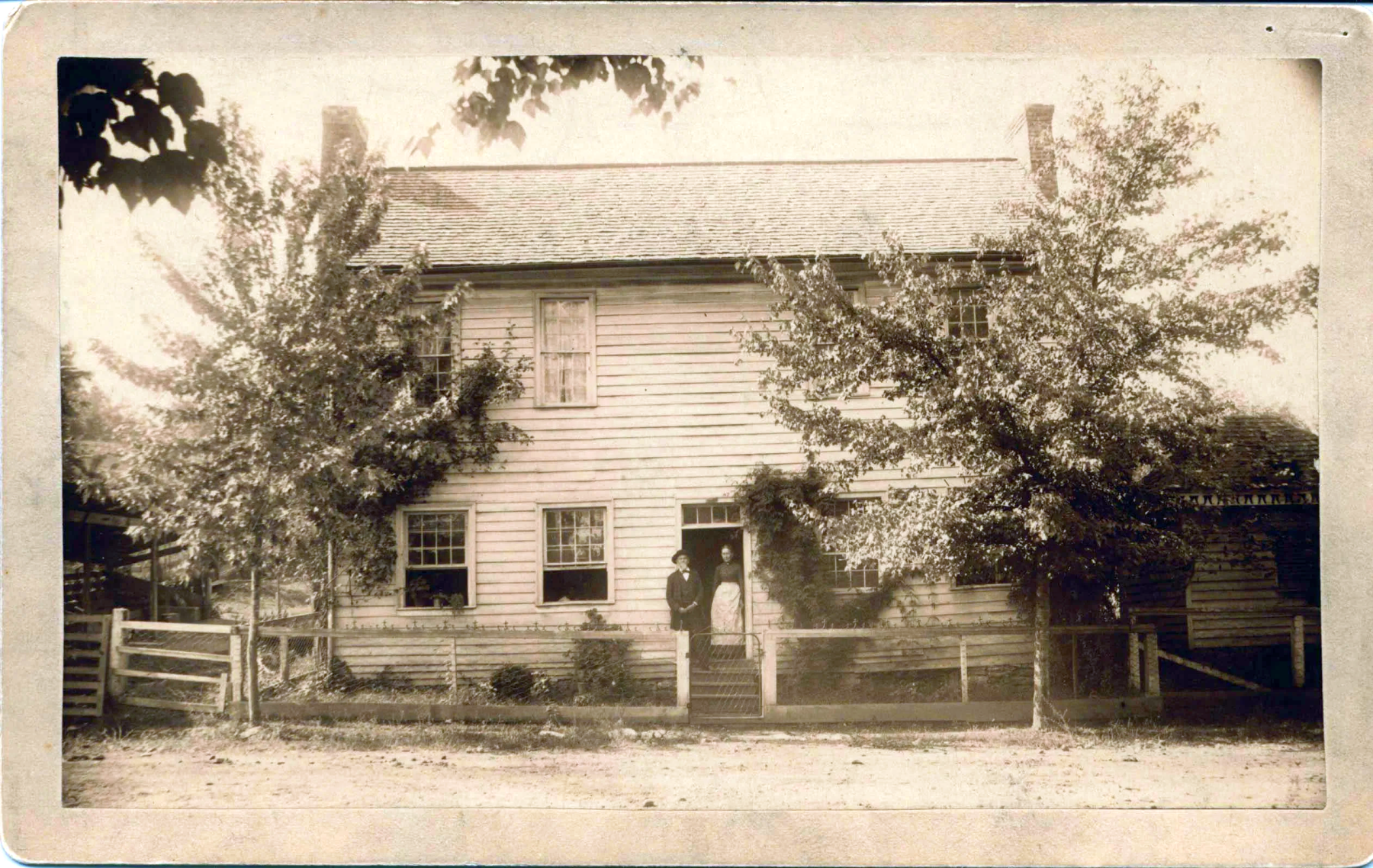
There have been many stories told about the site or house that the Legislature met in during their stay in Kingston. In one of the earliest histories of the State it is related that “The Legislature met in 1807 in a building in Kingston occupied in part at the time by one J. L. Gordon as the Court House was supposed not to have been built at that time.” I have made a careful search of the early records in the Court House and can find no property listed in the name of J. L. Gordon, but since the early history states that Mr. Gordon occupied the building “in part,” then it is possible that he was renting the house, or a part of it. It has been generally established by the older residents of Kingston, including myself, that the house in which the Legislature met was located on Race Street, where the Kingston Music Center now rents a building from C. W. Liggett. The old home that stood there until it burned in the 1920’s was last occupied by Billy Martin, a barber who later moved to Rockwood. This was a two story frame house with small rooms, and I have always wondered how all the Legislators and others connected with the Assembly could have possibly crowded into this small place. Undoubtedly, the old home was much larger in 1807, as one can see by reading the Minutes of the proceedings that there were at least 50 persons connected with the Legislature, therefore, it would be rather difficult to crowd all of these people into a small house, and no doubt, several spectators attended the meeting.
Several different versions of what business was transacted during the meeting have been made by many different historians. Therefore, I took upon myself the task of copying the proceedings from the original Minutes in the Library of Congress in Washington, D.C. Mr. James E. Pike, Director of Restoration and Reproduction, of the Tennessee State Library and Archives, also very kindly made me photostatic copies of the actual proceedings and these are being printed here in exact detail. It is most worthy to note that if only two Senators had changed their vote, Kingston would have been the Capital of Tennessee, and perhaps the largest city in the State. The actual Minutes of the Legislature during its stay in Kingston are as follows:
Journal of the Senate of the State of Tennessee, September 21, 1807.
Kingston, Monday 21st, September 1807. At a meeting of the General Assembly of the State of Tennessee in Kingston, on Monday the twenty first of September, One Thousand eight hundred and seven, being the first session of the Seventh General Assembly of the said State, the following gentlemen, members of the Senate, appeared, produced their credentials, were qualified and took their seats:
From the Counties of Anderson & Roane – Mr. George Preston. Davidson – Mr. Robert Weakley. Greene – Mr. John Russell. Grainger & Claiborne – Mr. Major Lea. Jefferson & Cocke – Mr. George Doherty. Jackson & Smith – Mr. William Walton. Knox – Mr. Hugh L. White. Robertson, Dixon – Mr. Parry W. Humphreys. Montgomery & Stuart – . Sullivan & Hawkins – Mr. Joseph McMinn. Sevier &Blount – Mr. John Wilkinson. Sumner & Wilson – Mr. Edward Douglass. Williamson &Rutherford – Mr. N. T. Perkins. Washington & Carter – Mr. Jonathan Tipton.
On Motion, Mr. Joseph McMinn was appointed Speaker, and was conducted to the chair accordingly. The House then proceeded to the appointment of a principal and an assistant clerk, and Joseph M. Anderson and Matthew Stephenson were put in nomination as candidates for principal Clerk, and Luke Lea was put in nomination as a candidate for assistant Clerk. Messrs Douglass and White were appointed to superintend the balloting, when on counting out the votes, it appeared that Joseph M. Anderson and Luke Lea were duly elected, and were qualified accordingly.
The House then proceeded to the appointment of a door keeper whereupon John Bright, Samuel Homesfirth, and William Madlock were put in nomination: Messrs. White and Douglass superintended the balloting, and on counting out the votes, John Bright was duly elected.
On motion ordered that a message be sent to House of Representatives, informing them that the Senate had convened, appointed Joseph McMinn Speaker, Joseph M. Anderson and Luke Lea Clerks, and John Bright doorkeeper, and are ready to proceed to business.
Mr. Preston introduced sundry resolutions entered into by the Citizens of Roane County, relative to the seat of Government, etc., which were read and ordered to be sent to the House of Representatives.
Received a message from the House of Representatives, informing this House that they had convened, appointed Mr. John Tipton Speaker, Mr. John Lowry principal Clerk, Mr. Alexander M. Nelson assistant Clerk, John Rhea door-keeper, and were ready to proceed to business.
On motion ordered that Messrs. Weakley and White be a committee to draw up rules for the government of this House.
Ordered that the following message be sent to the House of Representatives: The Senate propose that a Committee be appointed to wait on his excellency the Governor, and inform him that the General Assembly has convened and is ready to receive any communications he may be pleased to make; and have nominated Mr. Douglass on the part of this House to act with such gentlemen as you may appoint.
Ordered that the following message be sent to the House of Representatives: The Senate proposes that both Houses meet this evening at five O’clock in the Representatives Chamber, to count out the votes for Governor and Representatives to Congress.
Received from the House of Representatives a message accompanied by the following resolution: Resolved by the Senate and House of Representatives of the State of Tennessee, that this Legislature do adjourn forthwith from Kingston, to meet on Wednesday, the 23rd, inst. at eleven O’clock a.m. at the Court House in Knoxville. Which was read and concurred with.
Ordered, that a message be sent to the House of Representatives as follows: We concur with the resolution by you adopted that the Legislature do adjourn forthwith from Kingston to meet on Wednesday the 23rd inst. at eleven O’clock a.m. at the Court House in Knoxville.
On the adoption of the resolution for the adjournment of the Legislature from this place to Knoxville, Mr. Preston moved for the yeas and nays, where were as follows: Yeas – Messrs. Weakley, Lea, Doherty, White, Humphreys, Douglass, Perkins and Tipton. Nays – Messrs. Preston, Russell, Walton, and Wilkinson.
On motion ordered that the following message be sent to the House of Representatives: The Senate have adopted the following resolution, to which they ask your concurrence. Resolved, that the public offices and public papers brought to this place by reason of the adjournment of the Legislature from Knoxville in the County of Knox to this place, be re-conveyed from this place to Knoxville as soon as practicable.
Received from the House of Representatives a message concurring with the resolution of this House, that all the public offices and public papers be re-conveyed from this place to Knoxville as soon as practicable.
The House then adjourned to meet at the Courthouse in Knoxville, on the 23. inst. at eleven O’clock a.m.
Journal of the House of Representatives.
At a meeting of the General Assembly of the State of Tennessee on Monday the 21st. day of September, One Thousand eight-hundred and seven at the Town of Kingston, the following members appeared, produced their credentials, were qualified and took their seats. From the County of — Blount, Mr. James Scott. Carter, Mrs. Abraham Doran. Claiborne, Mr. John Canbebber. Cocke, Mr. William Lillard. Davidson, Mr. Thomas Williamson. Grainger, Mr. John Cocke. Greene, Mr. Robert Guin. Hawkins, Messrs. William Young – William Bradley. Jackson, Mr. John Crawford. Overton & White, Mrs. Henry J. A. Hill. Jefferson, Mr. Christopher Haynes. Knox, Messrs. James Trimble – Thomas Dardis. Montgomery & Stuart, Mr. Willie Blount. Roane & Anderson, Mr. John Kirby. Robertson & Dickson, Mr. Anderson Cheatham. Rutherford, Mr. Joseph Dickson. Sevier, Mr. John Cannon. Smith, Mr. Joel Dyer. Sullivan, Mr. John Tipton. Sumner, Messrs. Samuel P. Black, Joseph Cryer. Washington, Mr. William Mitchell. Williamson, Mr. Chapman White. Wilson, Mr. Robert Edwards.
The House then proceeded to ballot for a Speaker when Messrs. Trimble, Tipton, Blount and Lillard were put in nomination and Messrs. Trimble and Cheatham appointed to superintend the balloting:- and upon counting the votes, Mr. Trimble reported that Mr. Tipton had nine votes, Mrs. Lillard twelve, and Mr. Blount three. Whereupon Mr. Blount‘s name was withdrawn and the gentlemen appointed to superintend the balloting reported that Mr. Tipton had a majority of the whole House, whereupon he was conducted to the chair.
The House then proceeded by ballot to the choice of a Chief Clerk when John Lowry, William McKnutt [sic], and David Gearsly were put in nomination. Messrs. Blount and Cocke were appointed to superintend the balloting who upon counting the votes reported that Mr. Lowry and Mr. Gearsly had each eleven votes and Mr. McKNUTT four – neither having a majority. The House then proceeded to ballot a third time, the same gentlemen appointed to superintend the balloting, upon counting the votes reported that John Lowry had a majority of votes, was duly elected and was qualified accordingly.
The House then proceeded to the choice of an Assistant Clerk, when Messrs. Alexander M. Nelson, Thomas Buckingham and Robert Houston were put in nomination. Messrs. Blount and Cocke were appointed to superintend the balloting who upon counting the votes reported that Mr. Nelson had nine votes. Mr. Buckingham eleven and Mr. Houston five votes, neither having a majority of the whole House. Mr. Houston‘s name was then withdrawn and the same gentlemen appointed to superintend the balloting who upon counting the votes reported that Mr. Nelson had a majority, was duly elected and qualified accordingly.
On motion Mr. John Rhea was unanimously chosen door keeper–
Received from the Senate a message stating that they had met, chosen Joseph McMinn Esq. Speaker, Joseph M. Anderson and Luke Lea Clerks, and John Bright Doorkeeper, and were ready to proceed to business, which being read the House answered by message that they were also ready to proceed.
Mr. Trimble introduced the following resolutions which were read and adopted. Resolved by the Senate and House of Representatives of the State of Tennessee that this Legislature adjourn forwith from Kingston to meet on Wednesday the 23rd. Inst. at eleven o’clock a.m. at the Courthouse in Knoxville.
Ordered that a message go to inform the Senate thereof which was sent accordingly —
Received from the Senate a message stating that they had appointed Mr. Douglass to wait on his excellency the Governor for the purpose of informing him that the Legislature are in session and ready to receive any communication he may think proper to make, which being read Messrs. Blount and Cocke were appointed on the part of this House to act with the above gentlemen and a message was sent to inform the Senate thereof —
Ordered that Messrs. Dixon, Trimble, Black, Kirby, Young and Mitchell be appointed a committee of privileges and elections.
The memorial of Isaac Tipton was received read and referred to the Committee of privileges and elections.
Received from the Senate a message stating their concurrence with the resolution of this House of adjourning to Knoxville – also their resolution that all the public offices be removed to Knoxville which was concurred with —
Adjourned to meet at Knoxville on Wednesday the 23rd. Inst. at 11 O’clock a.m.
When the resolution was passed on Sept. 11th. and13th. in 1806 for the Legislature to meet next in Kingston, three commissioners were named to make the necessary arrangements for accommodations during their stay in Kingston. One of these commissioners was a Jacob Jones, who later turned in a bill for his services, stating that he had provided “nine tables, ten benches, three steps for each Speaker, and one window containing 15 lights.” His bill was for the odd amount of $72.08-1-3 cent and this was reduced later by the committee on claims to $55.50.
On October 20, 1950, the monument commemorating Kingston as the State Capital for one day was dedicated with appropriate ceremonies. Kingston almost missed out on this marker, as when he the bill was introduced in the Legislature, the Town of Kingston was omitted from the appropriation. I was Commander of the American Legion at that time, and Bob Ladd, the Adjutant, called my attention to the omission. I immediately got on the phone and called Sterling Roberts, who was a member of the Legislature at that time, and Sterling very ably handled the matter and had the funds restored giving Kingston a $4500.00 monument to commemorate the event. This monument is located in the American Legion Park across from the High School, and I am now working to erect a suitable road marker for the actual Capital site on Race Street.
There have been several opinions advanced by historians, as to why the Capital was moved from Kingston, after being there for only one day, and in session only about 2 hours. It is true that the terms of the treaty with the Cherokees were met, but Kingston in 1807 must have been a tiny hamlet with very few accommodations for visitors. As shown, there were 52 persons mentioned as actually being present, besides any others who were there on business, or as spectators, and I do not believe that the Town could provide ample lodging, food, and other necessary accommodations for 50 or more non-residents. Even today, 50 or more visitors could not be accommodated by the two small motels in Kingston.
In November 1799 two Movarian Missionaries made a trip through this area, and stopped for the night in Kingston. Their account follows:
“When it had already become dark we reached a number of poor huts, having heard much in praise of Southwest Point, we asked concerning it, received the information that this was the place. Upon inquiry for an inn, we were told that we stood before it, and that we should find here the best service. This house belongs to Major King, and we heard later that it was the worst and most Godless in that region.”
In a census taken in December 1801, there were only 77 persons listed as living in Kingston, and 30 of this number were slaves. This left only 47 white persons, and in this number there were only 13 male residents over 16 years of age. If each male resident over 16 years of age was the head of a family, then in 1801 we can presume that there were not more than 10 or 12 dwellings in Kingston, and by 1807, the number of homes must not have been over 25 or 30, therefore it is very likely that the main reason for moving the Capital was the housing situation.
In 1843 the question of a permanent Capital for the State was still in debate and undecided. On the very first day of the Assembly when it met in 1843, a resolution was introduced to establish a permanent Capital for the State. On October 4, 1843 the Senate passed a resolution that the permanent Seat of Government for the State be fixed as Kingston, and upon roll-call vote the resolution carried 13 to 12. That same day when the resolution came up for vote in the House it was defeated by only 3 votes, 11 ayes, 14 nays.
And so it was, that on that date of October 4, 1843, the chances of Kingston being the state Capital slipped away forever. The poet, John Greenleaf Whittier, could have been thinking of Kingston, unless maybe it Maude Muller, when he wrote these immortal words: “God pity them both and pity us all, Who vainly the dreams of youth recall: For all sad words of tongue or pen The saddest are these: “It might have been!”