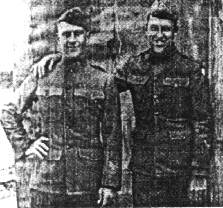
Beckham, Ivy F.

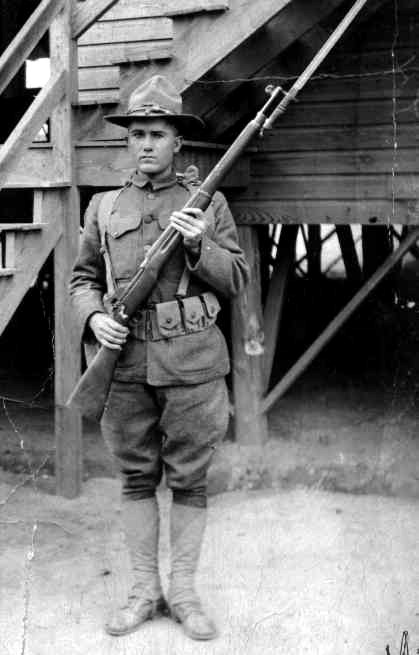
Ivy F. BeckhamBECKHAM, IVY F. was born 4 February 1895 in Hill County, Texas, he died 10 February 1949 at Pinhook, Wayne Co., Tennessee. He was the son of John Finley BECKHAM (3 Nov 1864 – 24 Sept 1928) and Mary C. BECKHAM (30 Jan 1870 – 13 Jan 1927). Ivy married Lorene HOUSE of Lutts, Tennessee in 1923.
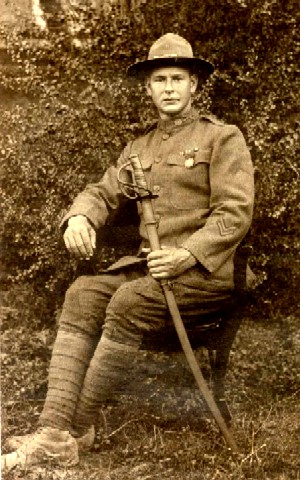
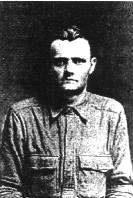
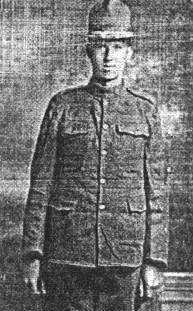
Ivy BECKHAM was inducted on 27 June 1918 at Florence, Alabama and served as a corporal in the American Expeditionary Forces in France and Germany from 8 Sep 1918 until 31 Oct 1919. He was discharged on 14 Nov 1919 at Camp Gordon, Georgia. According to his discharge he was a mail carrier at the time of his induction. He was described as having blue eyes, dark hair, light complexion and was five feet, eleven inches tall.

According to a story told by Ivy BECKHAM, he was in charge of a group of Chinese soldiers and had to take them back to China aboard a cattle train. This resulted in him returning to Wayne County much later than others.

After being discharged in 1919, Ivey Finn came back to Wayne County and from 1921 to 1922 he served as a Star Route Mail Carrier, his route being from Lutts to Collinwood. In 1923, he became a truck driver and substitute mail carrier on Rural Route No. 2. In 1932, he and Lorene purchased her father, John HOUSE’s General Store which they operated until the time of his death in 1949. Ivy and Lorene had three daughters: Geraldine, Sue and Laura Jo.

Beatty, John M.

beattyBEATTY, JOHN M., born January 1892, Rt. 2, Topsy, TN. He was the son of Moses J. BEATTY who isburied at Banks Cem. Lewis Co., TN and Annie B. According to available census records, he had siblings: Sarah R. and Florence A. He was inducted at Waynesboro, TN.

Additional information and photograph submitted by Barbara Higdon

Information that I have.  John was the son of Tennessee V. Casinger and Moses Joshua Beatty, Sr.  Florence A. is also child of Tennessee and Moses.  This was Moses’ second marriage. TN Marriages 1851 – 1900
BEATY, M. J.   Spouse: CASINGER, TENNESSEE  Marriage Date: 10 Dec 1889   County: Wayne State: TN

This is where I believe Tennessee to be buried.  There was also a Daniel with no dates and it made me wonder if she may have died in childbirth. Wood Cemetery Centertown, Warren County, Tennessee
Beaty, Tennessee, (no dates)
Beaty, Daniel, (no dates)

Moses married a third time to Annie Buckelew but there was no children born to that marriage.
BEATTY, M. J.
Spouse: BUCKELEW, E. A.
Marriage Date: 5 Jun 1900
County: Wayne State: TN

Moses first marriage was to Margaret Caldonia Himes (February 12, 1862 in Lewis County).  Children born to that marriage were:
James Daniel Beatty
Moses Joshua Beatty, Jr.
Lasora Beatty
Sarah Francis Beatty
Mary L. Beatty
Monroe Beatty

Tennessee’s parents were Sarah Ann Whitehead and Ezekiel Kesner.  The Casinger  / Kesner gets confusing depends on which census you see.  I think most in this area use the Kesner name.

Moses, Sr. parents were Francis Priest and James Beatty.  James was from Ireland.
Tennessee
Williamson County
Beaty Preast, James Fanny
Spouse: Beaty, James
Preast, Fanny Marriage Date: 04 Nov 1813

Balentine, Thomas Green

Thomas Green BalentineBALENTINE, THOMAS GREEN, was born in Wayne County, Tennessee on 6 February 1897. He was killed by Thomas MARTIN on 5 July 1919 after his discharge from the army. 
He was the son of Richard Huston BALENTINE Jr. and Betty Jenny DULIN BALENTINE. 

Thomas Green BALENTINE is buried at Balentine Cemetery, near Cypress Inn, Wayne County, Tennessee 

Ayers, Charles S.

ayersAYERS, CHARLES S., PFC, 137 Infantry, 35th Division.
Charles S. AYERS was born at Martins Mills, Wayne County, Tennessee on 27 December 1894. He was inducted into the Army, 28 May 1918 and served from 18 July 1918 to 23 April 1919. He was discharged 12 May 1919.

He married Madgie HORTON on 8 April 1923. They had seven children: Ralph AYERS, Lesbue A. HOWELL, Lorene A. PIGG, Hazel A. CASTEEL, Ross AYERS, Faye A. MELSON and Susie A. LONG.

He died 12 August 1986 at the age of 92.

Andrews, John Henry

ANDREWS, JOHN HENRY, born 26 January 1891, died 2 January 1966, buried Bethlehem Cemetery, Wayne County, Tennessee. He was the son of Dave ANDREWS (1862-1952) and Sally MELSON ANDREWSJohn Henry married Della ROBERTS on 11 Nov 1917, by J. M. WISDOM. She was born 27 July 1895. They had no children. They belonged to and were faithful members of the Bethlehem Baptist Church, California Branch, Wayne County, Tennessee. They lived close to the church. John Henry was a farmer. His siblings were Charles E. ANDREWS, Maggie ANDREWS KELLY, Mae ANDREWS GRAY and Bertha ANDREWS TODD.

Abrams, Otis McKinley

abramsABRAMS, OTIS McKINLEY (MACK), (1894-1980) was born in Gillises Mills, Hardin Co., Tennessee, the son of George Dougal Abrams and Hettie Falls Abrams. He attended school there and on finishing high school taught briefly. At the onset of World War I, on 12 Nov 1917, he enlisted in the army at Waynesboro , TN and was sent to Camp Gordon, GA for training. He was assigned to Company “A”, 1st Battalion, 307th Engineer Regiment of the 82nd Army Division. The Regiment was sent to France on 19 May 1918. As far as I know, Mack was not involved in combat, but was in the area where the Germans were shelling in the Toul Sector from 25 June to 10 Aug. 1918, Marbache Sector from 17 Aug. to 11 Sept. 1918 , St. Mihiel Operation Sept. 12-16 and the Meuse Argonne Offensive from 26 Sept. to 3 Oct. 1918. Company “A” spent most of the time repairing roads, building bridges, concrete pill boxes and shelters and digging foxholes and trenches. On 10 October 1918 the company took over a captured German railroad north of Varennes and operated it in supply service, delivering rations, forage and artillery ammunition to Apremont, Chehery and Cornay for a period of about 2 weeks. Mack came down with malaria while in France and spent time in a French hospital in the village of Bar-le-duc near the town of Nancy. The French doctors cured the malaria and he never had a recurrance. On 15 April 1919 the regiment left France and returned home. Mack was discharged on 21 May 1919 and returned to Waynesboro, TN where his parents lived.

In the fall of 1919 Mack went West – first to the wheat harvest in Kansas and then to Oklahoma. In Shawnee, Oklahoma he got a job with the Santa Fe Railroad as a locomotive fireman on the local switch engine. In 1927 he went back to Tennessee on vacation and while visiting relatives in Lawrenceburg met Lerlie Lee Powell, daughter of Jacob Marion Powell and Nancy Bassham. When Mack returned to Oklahoma, he and Lerlie corresponded by mail for a period of 2 months writing almost daily letters. In April 1927 he went back to Lawrenceburg and proposed marriage. She accepted and they were married 11 April 1927 and spent their honeymoon on the trip back to Oklahoma in Mack’s Model T Ford.

Their first child, Mary Carolyn, was born in 1928 followed by Herbert Victor in 1930. Mack and family moved to Cushing, Oklahoma sometime between 1930 and 1935 when Mack got bumped from his job in Shawnee. A second daughter, Anita Jean, arrived in 1935. Shortly thereafter the family moved back to Shawnee where they stayed until 1939. Mack had been promoted to Engineer and was low man in seniority in that position so he got bumped again. This time the family moved to Purcell, Oklahoma in 1939. Purcell was not as large as Shawnee and at first they hated it, but over the years they grew to love the little town and the many friends that they made there. In 1941 a second son, Donald Mack, arrived followed by Gary Wayne in 1943. Mack worked seven days a week to support the family and put all three sons through college.

Mack retired in 1965 after 44 years of service with the Santa Fe Railroad. He enjoyed his retirement years and stayed active well into his 80’s. He died on 5 August 1980 and was buried at the Purcell Hillside Cemetery with full military honors.

Submitted by Herb Abrams

Adams, David R.

David R. Adams, a pioneer of Wayne County, Tenn., was born October 17, 1813, son of William and Unity Adams, who were married in their native State (South Carolina), and soon immigrated to Tennessee, where the father farmed and lived for many years. The mother died here December 9, 1832, and six years later the father moved to Missouri, where he died about 1850. He was a Whig in politics. David R. lived with his father until twenty-three years of age, when he united his fortunes with those of Eliza Woodward, a Tennessean, born in 1819, and daughter of Solomon and Elizabeth (Biven) Woodward. To them were born seven children: Martha E.(deceased), William J., Elizabeth A. (deceased), Wiley H., Unity J., George S. and John F. After his marriage Mr. Adams farmed a few years and then moved to Mississippi, but not being satisfied, remained only a few months, when he returned to Tennessee. He resided in different parts of the county until 1852, when he purchased his present farm of 113 acres. The land is in a good state of cultivation and fairly well improved. When Mr. Adams first moved to Wayne County it was very sparsely settled. He is a member of the Free-Will Baptist Church, and has has always been a Republican in politics. He is strictly temperate, and has always evaded lawsuits, never being sued or having to sue but one man in the whole course of his life.


Transcribed by Fred Murtishaw.

Source: Goodspeed’s history of TN (Wayne County, pp. 763-777, 849-889). Goodspeed, 1886.


Acklin, Thomas F.

Thomas F. Acklin is one of the firm of Mays & Acklin, liverymen of Clifton. They established their business April 1, 1886, and keep a full and excellent line of vehicles, the best in town or county. They deal quite extensively in horses and mules, and in connection, in January, 1885, established a retail liquor store, which they have conducted with fair success up to the present time. Thomas F. Acklin is a son of Cleaburn and Martha (McCreley) Acklin. who were born in Tennessee and North Carolina respectively. Thomas F. is a native of Wayne County, born May 15, 1845, and was reared to manhood on a farm. He enlisted in the Confederate Army in 1861, and served in Company F, Forty-eighth Tennessee Infantry for over three years, and in the Twentieth Regiment of Tennessee Cavalry the remainder of the war. From the time of his return home until December, 1882, he tilled the soil, and at the latter date he came to Clifton and has since been engaged in the livery business. Previous to this he kept a hotel in Saltillo for some time. In 1871 he united his fortunes with those of Sarah M. Nunley, and two children have blessed their union: Tempie and James. Mr. Acklin is a Democrat and one of the eminent business men of Clifton.


Transcribed by Fred Murtishaw.

Source: Goodspeed’s history of TN (Wayne County, pp. 763-777, 849-889). Goodspeed, 1886.


History of Evans Chapel United Methodist Church

by Peggy Richardson

This paper was presented at the March 2000 meeting of the Wayne County Historical Society held at Evans Chapel United Methodist Church on Eagle Creek Turnpike.


What inspired this rural community to build this church in 1898? If you are familiar with Methodist history, we know that circuit riders were a part of establishing the Methodist church. In the book “Organizing to Beat the Devil” by Charles FERGUSON, it states that of statistics of growth accumulated in its
formative years, Methodism was not a mass religious movement. It was a movement sustained at the community level by small groups. The groups formed a habitat in which the nurture of the individual was natural. Travel put the preachers where the people lived and made informal meetings easy. 

    I have reflected on my memories of this church. I remember that the men stayed outside to discuss the last week’s events regarding weather, crops or politics until the pianist started to play. They came in their newest overalls and the ladies in their newest dress. We always sat with the women on one side and the men on the other. It was not until I visited other churches that I realized this was unique to this church. 

    As a young child I remember wasps flying and at one point a bird’s nest in the top of the ceiling. It was at that time restorative work had to be done including interior painting and underpinning the church.

    One of my fondest memories was the day the bell was removed from the belfry. It was with incredible strength, determination and team effort that the men lowered the bell from the steeple to the ground using a rope as a pulley system with only a small niche in the eave of the church. I can only imagine the sense of
accomplishment when the bell was initially place in the belfry.

    I had the opportunity to meet with Dr. Carroll Van West from MTSU to assist us in the correct and appropriate information for the nomination of the church to the National Register of Historic Sites and Places. I will use the information to describe the architectural significance of the church. 

    The church is a Gothic Revival one-story weatherboard building constructed in 1898. It has a steep front-gable roof. The original two-over-two double hung sash vertical windows are topped with triangular pedimented lintels and the windows retain the original hardware. Though no the original, the outer doors are a
simple cross and Bible paneled door. The interior is dignified by its simplicity. The original beaded-board ceiling and walls are intact. The floors are the original poplar floors. The pews were made by Jesse COPELAND. James F. DICUS carved the church pulpit and altar rail. There is 3 feet, 3 inches high wainscoting
covering all the interior walls. The window and door frames are accented with bull’s eye motif at the corners. The building was wired for electricity in 1948. It is not known where the altar furniture came from.

    The property was purchased in August 1897 from H. O. and Annie GRIMES. The purchasers were James F. DICUS, George PITTS, John P. BATTLES, Oscar DICUS, and H. A. GRIMES. It is only an oral tradition that traces the name of the church to J. O. EVANS, a man who helped a lot. Carpenters were Jess and Wayne COPELAND of Waynesboro, James F. DICUS and John and Will BARNETT of Clifton.

    From 1900 to 1930 was the most active time for the church with a very popular singing school of gospel music being taught here in 1922.

    In 1978, a Sunday School room was added with carpenters being N. A. FLOYD, John TOMPSON, Raymond MORROW and Randy MORROW, assisted by James FLOYD and Carolyn STRICKLAND. Wayne LINEBERRY dug the well for the restroom installation in 1983.

    This church has served the community well. It has been the site of weddings, birthday parties and community gatherings. It has also been a place of strength and comfort. This day pays tribute to the many families that have been a part of this church, names found in Mrs. Irene DICUS’ history of the church and recorded on the roll book. Our ancestors would be honored today to know that their efforts have withstood the test of time.

History of the Martin’s Mills Community

by Ruby Johnson


North of Pinhook about four or five miles lies a small community called Martin’s Mills. It is located in the forks of Weatherford and Indian creek and north across Indian Creek and West across Weatherford Creek to the Hardin County line.

As I searched for information on Martin’s Mills Kenneth Skillern let me borrow the history of the Martin family taken from Wayne County Historian, Volume 4, Number 3, September 1991. This was the same family for which Martin’s Mills was named and was written by Richard W. Martin of Athens, Alabama.

Ancestors of the Martins came from Belfast, Ireland to America between 1750 and 1760 and settled in Bourbon County, Kentucky. Jefferson Martin, who finally settled in Wayne County, was the oldest of ten brothers and sisters all born in Bourbon County. He was born February 1803. All the children attended the common schools of Kentucky which were primitive structures without a floor and furnished with slab benches.

Before the Civil War, the Martin family was divided and Jefferson moved to Williamson County, Tennessee in 1827. There he met Esther L. Stuart and they were married January 8, 1829. In the next ten years she and Jefferson became the parents of four children, all born in Williamson County.

In the early 1850’s, Jefferson’s family moved to Lawrence County, Tennessee where he and his oldest son, Edward B., were in the real estate business.

Their next move brought them to Martin’s Mills in Wayne County, Tennessee. Moving with Jefferson was his wife, Esther, their daughter, Sarah Martin Atkins and her son, and Edward B. and his wife, Mary Ruth and son Jim.

Jefferson and son, Edward B., bought Cravens Mills on Weatherford Creek for $15,000.00 and 600 acres of land on Indian Creek for $4,000.00. Then on August 25, 1860, the bought 22½ acres from L. P. Cheatham.

Prior to the Civil War they were operating a steam mill, water mill, grist mill, brewery, cotton gin and a distillery. They also had a general store which carried all the needs of the families in the Martin’s Mills area within a radius of ten to twelve miles. To keep the store furnished, they had to travel by wagon up Gant Hill and across the ridge to Clifton to meet the boats to buy their commodities.

The local people came to the mills to get corn ground into meal or to have timber sawed into lumber. While there they purchased other needed items such as salt, coffee, sugar, snuff, chewing tobacco and overalls. With the tanyard they could get shoes and some farm equipment.

In the 1860 Wayne County census, Jefferson Martin is shown as the owner of five slaves and his son, Edward B, as the owner of four. The slaves were used to help run the mills, cotton gin and sawmill.

On the morning of May 29, 1863, the Civil War came to Martin’s Mills. In a report made by Captain Eagleton Carmichael of Company B, 15thIllinois Cavalry to his headquarters in Corinth, Mississippi on June 2, 1863, he states that he chased Biffle’s band of guerrillas in the area around Martin’s Mills and Pinhook on the morning of the 29th of May. The Martin’s Mills had all been destroyed with only a concrete dam remaining. All the wheat fields had been burned and the women went to the burned mills and scooped up flour that was spilled on the ground.

Just twelve days after the battle of Martin’s Mills, Jefferson Martin’s wife died and was taken back to Mt. Ararat Cemetery in Lawrence County to be buried with others in the family.

In February of 1864, the Martins bought 172½ acres at Martin’s Mills for $1,800.00. They put the troubles of the war behind them and rebuilt the mills. Soon they were in business again and glad to be alive.

On August 14, 1873, a post office was established at Martin’s Mills with Edward B. Martin appointed the first postmaster. While at Martin’s Mills he served as a Justice of the Peace and as Chairman of the County Court of Wayne County. He retired as postmaster on September 7, 1882. After his father, Jefferson died in Waynesboro in 1886, he sold all their real estate at Martin’s Mills and went to Cisco, Texas to live with his son, Jim. He died in June 1893 and was buried there. From that time to the present, this area has been called Martin’s Mills, a well deserved name.

Myers, Paulk (John Paulk) and Company, dealers in dry goods, groceries and general merchandise may have been the buyers of some of the real estate sold by the Martins. They went into business in 1895.

In 1899, Frank Parker was also a dealer in general merchandise in the area.

In the early 1900’s, S. R. Eaton operated a general merchandise store north of Morgan Branch.

J. A. Lacefield built a two story house and a store and began operating a general merchandise store and a cotton gin in 1906. In 1917, Mr. Lacefield sold his property to A. A. Johnson and he and Taylor Morgan operated the store and cotton gin. After they went out of business, Isham Beckham and several others had a store there until it ceased to be in operation. Part of this store building is still standing, a reminder of times that were for the older generation.

Dan Wilkerson also operated a general store and grist mill in the early to mid-1900’s. This old building is also no longer in use.

John Paulk sold his property to Mrs. Mary Newborn and she, along with her son, Henry Newborn, and her son-in-law, Luther Webb and wife, moved in. Later on Henry Newborn became the postmaster with the help of his wife, Emma (Wilbanks) Newborn. Dan Wilkerson carried the mail and John Beckham brought the mail from Waynesboro to the post office.

The next postmaster I am told was Arthur Chowning. I do not know how long each one served, but the post office was eventually moved to Lutts. The Martin’s Mills area were served for many years bu the Lutts post office until this route was switched to Collinwood.

John Greeson was probably the first mail carried from Lutts to Martin’s Mills. He carried the mail in a buggy pulled by two big black horses. His wife Cora, was his substitute and rode side saddle on a horse to deliver the mail, which must have taken all day. The John Morgan carried the mail for several years followed by his son, David, for a short time. When David was transferred to the Collinwood post office, Grady Sinclair became the last mail carrier from Lutts to Martin’s Mills. After the route was switched to Collinwood, Dumont Hanback, W. C. Smith and at the present time Doyle Risner have carried the mail for Martin’s Mills.

The history of Martin’s Mills would not be complete without mentioning the Rose Normal school of the 1800’s. Professor Robert Sutton, the president, and Professor Tolbert McAnnally, an outstanding schoolmaster, taught at Rose Normal which was a college. It was much more than an elementary school. People who really wanted to be educated in those days were students there. Many students boarded in the boarding hall including Superintendent John Gallien, Judge Frank Melson and my uncle, William Eli Cherry of Hardin County. Many local people were also educated there.

The boarding hall was located on what is now Brodie Johnson’s farm by a well that is still useable. The Rose Normal School burned more than a hundred years ago and the boarding hall was torn down and used in building a dwelling house.

In 1912, the Rose School was built and later on in the 1900’s another room was added. It was finally called the Martin’s Mills School and served the community until it was consolidated with the Pinhook School in the early 1940’s.

Another school was located on the G. W. Johnson farm in the early 1900’s on the north side of Indian Creek in what was called the Gant Bottom. This school for the colored people was also their church.

The only other church at this time was the Methodist Episcopal Church. In 1907 on December 10, H. H. Smith sold seven sixteenths of an acres more or less for $50.00 for the building. The M.E. Church used this property until October 1920 when it was sold to A. A. Johnson for $400.00 with P. D. Hall, James Lawson and W. H. Weaver as witnesses and J. D. Horton, Notary Public.

During the 1930’s the preachers from the Christian Church in Waynesboro came one Sunday afternoon a month and preached in the Martin’s Mills school building.

In September 1948, the Church of Christ started meeting in the vacant school building. In 1960, the congregation built a church building on land donated by Clura and Elizabeth Wilkerson which is still being used at the present time.

In years past the Skinner Farm on the north side of Indian creek had always been a source of community pride. After going through a gate there was a long lane leading up to a plantation type house with big cedars in the yard which was surrounded by a white picket fence.

During the last 1800’s and early 1900’s Samuel H. Sinclair, born in 1839, was the owned of the Skinner farm. He had married Eliza A. Harbour. A farmer of the farm was Elisha Harbour, probably a close relative. Sinclair owned more than 800 acres on Indian Creek.

In the 1880 census, Mr. Sinclair had three children: Minnie, Lina and James Samuel who was born in 1877 and died in 1896. Lina, born in 1874, was living in Kentucky in the late 1800’s and had married a Mr. Skinner. they had one son, born in 1896. In 1910, Lina was a widow at age 36 and Sinclair, her son, was 14 years old.

Samuel H. Sinclair was still living in April 1912 when he made a will that had not been probated in 1920. In his will he made his daughter, Minnie Martin trustee leaving land in nearby Hardin County to her and what is known as the Skinner Farm in trust to Lina and her heirs. After her father died, Lina and her son, Sinclair, remained on the farm for sometime but finally moved back to Kentucky where her granddaughter lived. Her son stayed at the farm for some time before going up north to work. At their deaths they were all buried at Mt. Hebron.

Through the years several different families occupied the Skinner House, but in 1933, the Joel Yeiser, Sr. family moved there and stayed until 1975. While operating the farm he served eight years as County Judge and five terms as County Trustee. In 1867, he died and was buried at Mt. Hebron. His wife, Mary (Young) Yeiser and daughter Sue continued to live on the farm until 1875 when they moved to Waynesboro. Sue died suddenly in 1988 and was buried alongside her father. Their son, Joel, Jr., who lived in Waynesboro, continued to operate their farms at Martin’s Mills until his death in 1991. He was also buried at Mt. Hebron.

In the Wayne County record of cemeteries, six cemeteries are listed in the Martin’s Mills area. First is the Eaton Cemetery on a hill at the Ernest Warrington farm where the Daniel Eaton family and some of the Yerby family are buried. The nine graves are dated from 1886 to 1941.

The second cemetery is the Herndon Cemetery located on the same farm about 300 yards behind Chrystine Warrington’s house on the east side of Weatherford Creek Road. Three graves are visible but one tombstone has grown into a cedar tree and the inscription cannot be read. One foot stone is marked W. H. It is believed that William and Sarah Herndon are buried there. Two graves have mounds of stone but no inscription.

The third cemetery is the Rose Cemetery up Morgan Branch from Brodie Johnson’s farm. Six members of the Rose family were buried there in the late 1800’s and early 1900’s.

The fourth cemetery is across Weatherford Creek at the top of a hill behind the Ronnie Yeiser farm. It is called the Cook Cemetery with tombstones dated from 1910 to 1920.

The fifth cemetery is called the Horton Cemetery by some and the Martin Cemetery by others. It is located on the west side of Weatherford Creek on the Tom Helton farm. The tombstones are dated from 1868 to 1939. Thomas Stribling, a Civil War veteran, is buried there. This is a larger cemetery than the others with close to thirty graves having tombstones.

The sixth cemetery is called Davana. It is one mile east of Hardin County line on a hill south of Indian Creek on Alfred Gallaher’s farm. Three members of the Davana family were buried there from 1834 to 1847.

Special thanks to the following people for information used to write this history: Ruby Reece; Grady Sinclair; Clura Wilkerson; and June Scott.

References: Wayne County Cemetery Records and old deeds.